Welcome to the Brunk Lab!
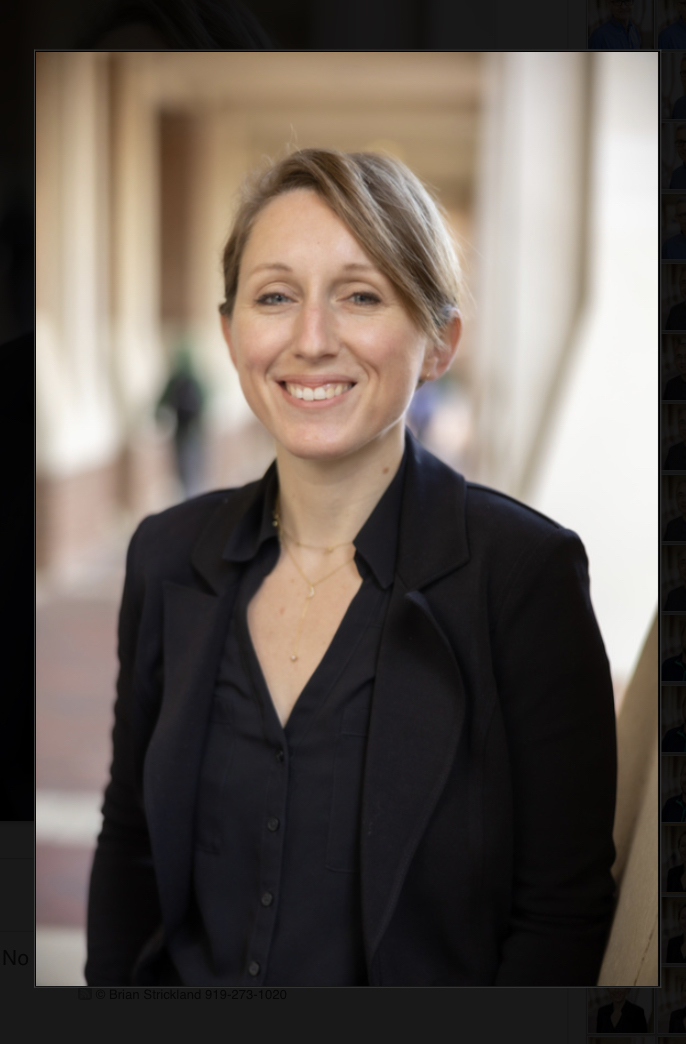
I’m Liz Brunk, a computational chemist turned genome scientist and AI enthusiast. Here you can learn about my scientific journey, research program, and the broader community and educational efforts that shape my work.
First time to the site? Start here
Educational Path
Liz earned her B.S. in Chemistry from the University of Michigan, Ann Arbor, followed by a Master’s in Physical Chemistry from École Normale Supérieure and a Ph.D. from EPFL. She completed postdoctoral training at UC Berkeley and UC San Diego, working in the laboratories of Jay Keasling, Bernhard Palsson and Pablo Tamayo in systems genomics. She also gained industry research experience at Celgene (now Bristol Myers Squibb).
Find me on:
My research program is centered on the development of computational and experimental frameworks that integrate molecular measurements across biological scales. I was trained first in quantitative modeling and theoretical chemistry with Ursula Roethlisberger, where all-atom simulations rooted in classical Newtonian mechanics gave me a foundation in biophysics, mechanistic biochemistry, and the use of models to explain how molecular structure gives rise to biological function. This training shaped the way I approach biology: not as isolated measurements, but as systems whose behavior emerges from interacting molecular layers that can be modeled, tested, and refined through experiment.
My postdoctoral training expanded this perspective from molecules to cells and systems. In the laboratories of Bernhard Palsson and Jay Keasling, I worked in bacterial systems biology, using multi-omic measurements to understand how engineered cells regulate metabolism and adapt across conditions. I later moved into human genomics and systems biology with Pablo Tamayo, and scientific interactions with Jill Mesirov and the Broad/CCLE ecosystem, where I focused on integrating genomic, transcriptomic, proteomic, and functional datasets to understand how cells rewire in response to perturbation. During this period, I helped develop Recon3D (Nature Biotechnology 2018), which linked genomic variation, transcriptomic and proteomic data, metabolomics, and protein structural information within a human metabolic modeling framework. Across these projects, the central idea was vertical integration: connecting DNA, RNA, protein, metabolism, structure, and phenotype to build more coherent and mechanistic models of cellular behavior.
This training prepared me to recognize both the promise and the limitations of large-scale multi-omic datasets. As a T32 trainee at the Moores Cancer Center and through work with large public and private datasets, I became immersed in the depth of available molecular data across cell lines, perturbations, time points, and therapeutic conditions. My subsequent work as an industry consultant further reinforced this view. I worked with teams generating thousands of samples across DNA, RNA, proteomic, and functional assays, where the central challenge was not data generation, but interpretation: how to integrate heterogeneous measurements in a way that revealed how cells were changing state, adapting to stress, or rewiring regulatory programs. These experiences convinced me that the next major advance in the field would require frameworks that connect modalities rather than analyze them separately.
As an independent investigator, I have built my laboratory around this problem. My group develops computational and experimental approaches for integrating single-cell sequencing, imaging, and cytogenetic measurements to understand how genome structure and molecular regulation coordinate to shape cell state. We have focused on experimentally tractable human cell line systems in which individual cells from the same population exhibit measurable differences in gene dosage, chromosome structure, RNA expression, protein abundance, protein localization, and morphology. Although many of these systems contain extrachromosomal DNA, the central focus of my work is broader: to use structured within-population variation as a biological anchor for building multimodal models of cell behavior. Over the first years of my faculty position, my laboratory has deeply characterized these systems, generated single-cell multi-omic and imaging datasets across multiple scales, and developed the experimental expertise needed to validate computational predictions with orthogonal measurements.
Teaching and mentorship are also central to my scientific program. Over the past four years, I have developed interactive, Jupyter-based “learn-by-doing” workflows that teach coding, data literacy, and omics analysis through real biological datasets. These materials have been incorporated into UNC’s large-enrollment undergraduate biochemistry course and have reached more than 3,500 undergraduates, many with no prior coding experience. My recently awarded NSF CAREER project will allow my group to expand these efforts into a broader AI + BIO educational program that trains students to use machine learning, multi-omics data, and biological reasoning together. The next generation of biomedical scientists will need to understand both experimental biology and computational modeling to make sense of increasingly multimodal data.


You must be logged in to post a comment.